Panleukopenia in cats - what you need to know about this disease?
We know very well how quickly viruses can be transmitted from one organism to another. Let’s imagine that they additionally settle in the environment and do not die for months, despite the change of times...
Content
What is panleukopenia and why is it dangerous? Is panleukopenia dangerous for humans?
The disease is caused by a virus of the Parvoviridae family. It attacks cats and other feline animals, as well as weasels and raccoons. Fortunately, people are free from the risk of getting sick. However, we may play a role in the mechanical transmission of the virus between animals.
Once the microbes have entered the body, they attack rapidly dividing cells - these are: the intestinal mucosa, lymphoid tissue and bone marrow, and in the case of newly born kittens - the central nervous system.
Feline panleukopenia, and, in fact, the microorganisms that cause it, are very common in the external environment and, unfortunately, direct contact between animals is not required for their transmission. Although a cat must ingest the virus for the disease to develop, we know that a cat grooms itself and also tends to rub against things, and we know that this is not difficult. In fact, it is enough for the cat to move in an environment where there is feces or secretions (saliva, nasal discharge) of a sick animal.
Therefore, sharing cat beds, bowls, or even being in the same room with cats whose history is unknown already poses a risk of developing panleukopenia. In addition, external parasites – fleas, scabies, etc. – also play a role in the transmission of infection. Let’s not forget about the human factor itself. If we care for sick cats, we can involuntarily on your hands, clothes or shoes to bring the virus into the house. Cats that don't go outside at all are also at risk for this situation.
When is the risk highest?
However, cats of all ages are at risk. kittens and weak animals are most at risk.
During the period when the cubs are fed by an immune mother, antibodies taken from the milk protect the babies from infection. However, after 12 weeks of age or even earlier for motherless kittens, the risk of developing the disease is very high.
The older the animal, the higher its resistance.. However, there are times when it is reduced, and these times can be critical when it comes to how much damage panleukopenia will cause in an adult cat.
Diseases of cats - panleukopenia. How does this manifest itself?
Sick animals are initially only apathetic and sleepy. It usually gets attention high internal temperature. They appear over time vomiting, lack of appetite, but a great desire to drink water. Taking it causes waves of vomiting, preventing the animal from drinking water properly. Soon after this he joins diarrhea that may contain blood or be very bloody.
Remember that the disease most often affects kittens. The lack of food supply and rapid dehydration for such small organisms is the reason for a significant deterioration in their condition. It happens that babies are not able to maintain proper body temperature, which quickly drops to values below physiological.
Older cats are usually asymptomatic. or we may only observe harmless signs of infection in them that the body can cope with. However, if a pregnant cat becomes ill, miscarriage or stillbirth of kittens may occur.
There are also cases when infection occurs in the perinatal period. In this case a sick mother transmits the virus to her kittens through milk. Young people then suffer from neurological and ophthalmological problems - they have, for example. muscle tremors, lack of coordination or visual disturbances. Such symptoms are characteristic only of perinatal infection and do not occur in older kittens.
Read also: Blood in a cat’s stool - what is the reason and how to help your pet?
Feline panleukopenia – how to recognize the disease?
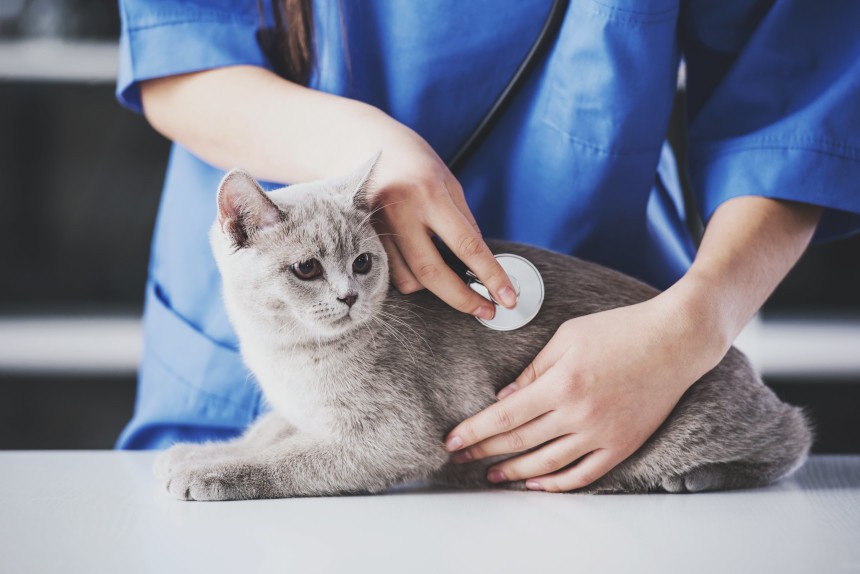
Already at the first signs of kitten apathy, you should take them to the veterinary clinic for an examination. However, vomiting or diarrhea is an absolute indication. Yes small animals become dehydrated very quickly, and simply stopping food intake is extremely dangerous for them.
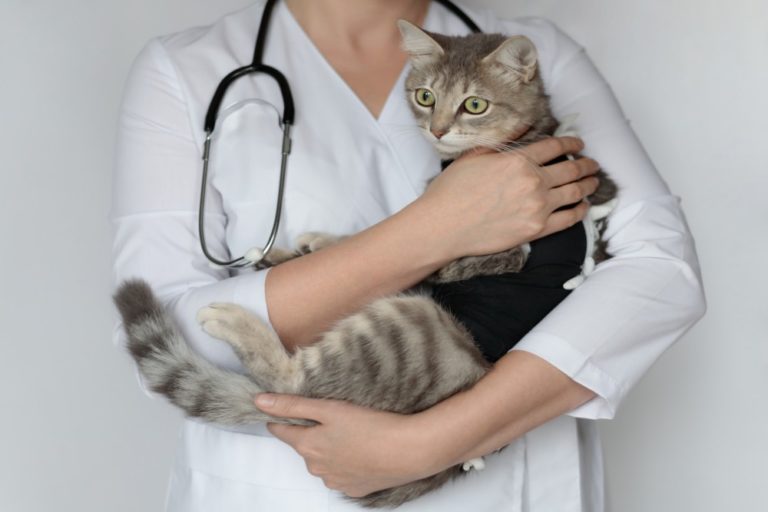
The doctor will conduct a clinical examination, but many questions will be answered by evaluating the results of a complete blood count. A significant decrease in the number of white blood cells due to damage to the bone marrow by the virus, as well as debilitating diarrhea (damage to the intestinal mucosa), fever and the general clinical picture are symptoms indicating panleukopenia. The disease must be confirmed by express diagnostics on an outpatient basis or with blood sent to a laboratory for a highly reliable PCR test. Thanks to these procedures, we can quickly determine whether panleukopenia is the cause of the cat's poor health.
Is panleukopenia curable? What's the prognosis?
The virus is very dangerous. Kittens have little chance of survival. To make matters worse, entire litters are usually affected. The mortality rate of kittens reaches 75%. In the case of diseases in older cats, it is estimated at approximately 50%.
Panleukopenia - treatment
Despite the high risk, sick cats should be treated immediately. This increases their chances of survival, but also gives them relief.
Stopping vomiting as well as adequate hydration is essential. Sick animals must remain in the hospital for a long time. Gradually intravenous irrigation is very effective and improves treatment results. Hospitalization also makes it possible to regularly monitor the animal’s body temperature and general condition.
Feline panleukopenia leads to depletion of the body, which, due to the severely damaged intestinal mucosa, is often susceptible to additional bacterial infections. For this reason, antibiotic therapy is immediately administered, as well as treatment that supports the animal’s immunity.
You should also take care of what your sick cat eats.. This is necessary to maintain proper functioning of the intestines, as well as to strengthen the entire body. Many surgeries also have the option of administering interferon or immune serum, which offers the chance to improve immune system function, which can further support regeneration.
In panleukopenia Treatment in some aspects is modified depending on the condition of the cat and its well-being. The same goes for the duration of therapy - it strictly depends on the cat’s response to treatment and the speed of its recovery. Remember, however, that simply being discharged from the hospital is not the end of the fight against the disease. The intestines need time to fully regenerate. Therefore, after the symptoms disappear, a special diet must be followed for several weeks.
How long does the virus remain in the environment?
The issue of contamination of the area with which the sick cat has been in contact is very important. As stated, even after several months, the virus will still be present on objects and throughout the environment, and it may still be contagious. Unfortunately, low winter temperatures, like high summer temperatures, do not destroy it. Commonly used cleaning products are also not 100% effective.
To combat it, you should use a 1-4% solution of formaldehyde, peracetic acid, sodium hydroxide or sodium hypochlorite, mixed with water in a ratio of 1:32.
How to protect cats?
All cats must be vaccinated – even those who spend their whole lives only at home. We never know whether we will encounter a sick animal or the environment it was in. Sometimes this happens completely unconsciously.
Kittens have been vaccinated several times. between 8 and 16 weeks of age, a booster dose is given after one year and then every 3 years. These simple procedures save cats' lives in many cases.
Vaccines are especially important in the case of “travelling” animals, staying in hotels or going on vacation with the owner. Particularly careful should be people who, having already had a cat at home, take another one with an unknown history. In this case, it is additionally necessary applying quarantine for a newly adopted pet. This will identify any alarming clinical symptoms, and in case of illness will also prevent contamination of the environment with unwanted microorganisms.
However, if there has already been contact between a sick cat and a healthy one, both animals should be isolated. This is a sure hope injection of antiserumhowever, there is no completely effective measure that will help prevent the development of symptoms in this situation.
Of many feline diseases, panleukopenia is characterized by an extremely rapid and severe course. The risk that an unvaccinated cat faces is very high. In addition, the places where sick animals stay should not be inhabited by other, unvaccinated cats for many months. In the face of such a dangerous disease, one cannot ignore such a powerful tool as preventive vaccination..