How to care for a cat after surgery?
Each operation, even planned, is a large load for our cat, both physical and emotional. As guardians, we are faced with the task of providing our pets with the best care after surgery in order to contribute to their rapid recovery and provide comfort during recovery. We invite you to read it, which will lead you through this process step by step.
Content
How to prepare to care for your cat after surgery?
To ensure our pet has the best possible recovery from surgery, we need to adapt both our home environment and ourselves accordingly to the challenges ahead. Below, we'll explain how to best prepare to care for your cat after surgery, from arranging transport and setting up a litter box to ensuring proper care and regular consultations with your veterinarian.
How to prepare transport and litter tray for a cat after surgery?
To properly care for your cat after surgery, it is necessary to arrange for safe transportation for it. The use of a special carrier is necessary for the safe transportation of the animal from the veterinary clinic to home after surgery. At home, we will try to arrange a suitable bed where our pet will rest. It is important that the litter box and all accessories it uses are easily accessible.
How to provide proper care for your cat after surgery?
To ensure our cat receives proper care after surgery, it is important to regularly consult with a veterinarian who will tailor care to the specific needs of the cat patient. Therefore, it is extremely important to take your cat for examinations to monitor its health and progress in recovery. For any alarming changes, you should consult a specialist.
What are the key aspects of post-operative care for cats?
Caring for a cat during the post-surgery period requires understanding various aspects that are critical to our pet's speedy recovery. From the moment the cat emerges from anesthesia, during the first days after surgery and until complete recovery, each stage requires an appropriate approach and vigilance on the part of the caregiver. The questions below will help you focus on the most important elements of postoperative care.
How to monitor your cat's health immediately after surgery?
Immediately after surgery and in the first few hours after surgery, it is important to carefully monitor your cat's response to anesthesia. Then it could be:
- vomit,
- drowsiness,
- pale mucous membranes,
- increased sensitivity to light and sounds,
- low body temperature.
These reactions are normal after anesthesia, but the cat should be monitored to ensure that it has fully recovered and that no serious complications have occurred. If the above symptoms persist several hours after surgery, your veterinarian should be notified.
How to support your cat's recovery after surgery?
The cat needs our support for a full recovery. We must take care of his physical condition, but also provide him with peace and comfortable conditions. He may be lethargic at first, so it is important to be patient and handle him carefully. Regular but gentle petting and spending time together can help improve our pet's well-being, which is no less important for the treatment process than the medical aspects.
How to properly care for a cat's wound and change the bandage after surgery?
Proper wound care will definitely contribute to a faster healing process. Regularly changing the bandage and monitoring for any signs of complications can make a significant difference in our pet's healing process. Below we'll show you how to care for your cat's wounds after surgery to give her the best chance for a quick recovery.
How often should the bandage be changed and how should the wound be monitored?
We should keep the wound clean and change the dressing as directed by the veterinarian, but it is important to monitor it regularly for signs of infection. If there is swelling around the wound, contact your veterinarian. Good hygiene and vigilance can prevent many post-operative problems.
When and how to use prescribed medications?
Pain medications and antibiotics prescribed by your veterinarian are necessary to control pain and prevent infections. Follow veterinary recommendations regarding dosage and dosage schedule. Compliance with the doctor’s recommendations will certainly contribute to better healing of the postoperative wound.
What to do if you notice alarming symptoms?
The operation was successful if the wounds heal correctly and the stitches dissolve in time. If you notice any warning signs, such as significant swelling around the wound, discoloration, foul odor, fluid discharge, or fever, contact your veterinarian immediately. Remember that prompt response to such signals can prevent serious complications.
How to use a cat safety collar after surgery and why is it important?
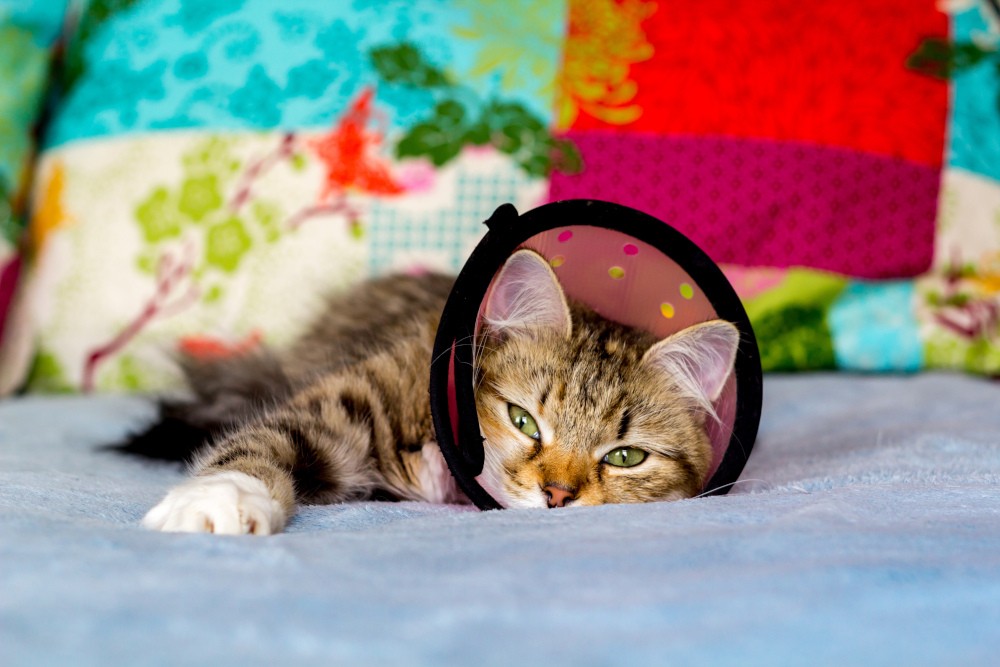
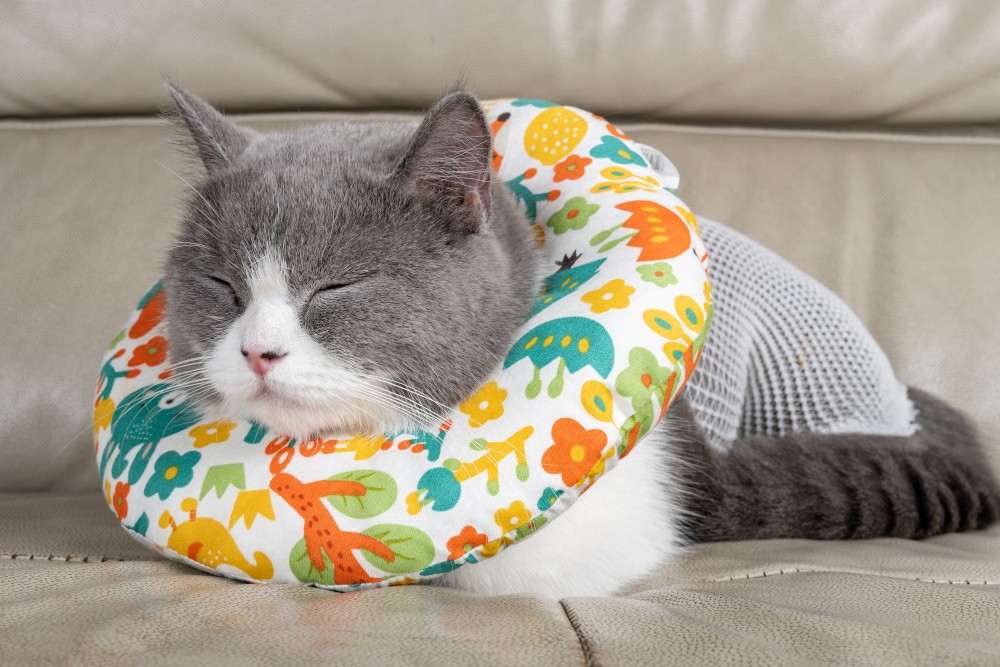
Using a safety collar is a key part of your cat's post-operative care. This simple but extremely important item speeds up the healing process. This prevents situations in which our cat could theoretically injure herself by licking or biting the stitches. Below you will find answers that explain how to properly use a safety collar and additional protective equipment such as a jacket and jacket to keep your cat comfortable and safe during recovery.
How to properly put a protective collar on a cat?
Place the protective collar around your cat's neck so that it does not restrict breathing or cause discomfort. It is important that it fits correctly - not too loose and not too tight. A properly placed collar will prevent your cat from touching the wound, allowing for unimpeded healing.
Why is a protective collar so important after surgery?
The collar prevents situations in which the cat could get hurt and protects it from licking or scratching the surgical wound. This is extremely important as this behavior can sometimes lead to infection or damage to the sutures and may delay the healing process or require additional veterinary intervention.
Is there an alternative to a safety collar?
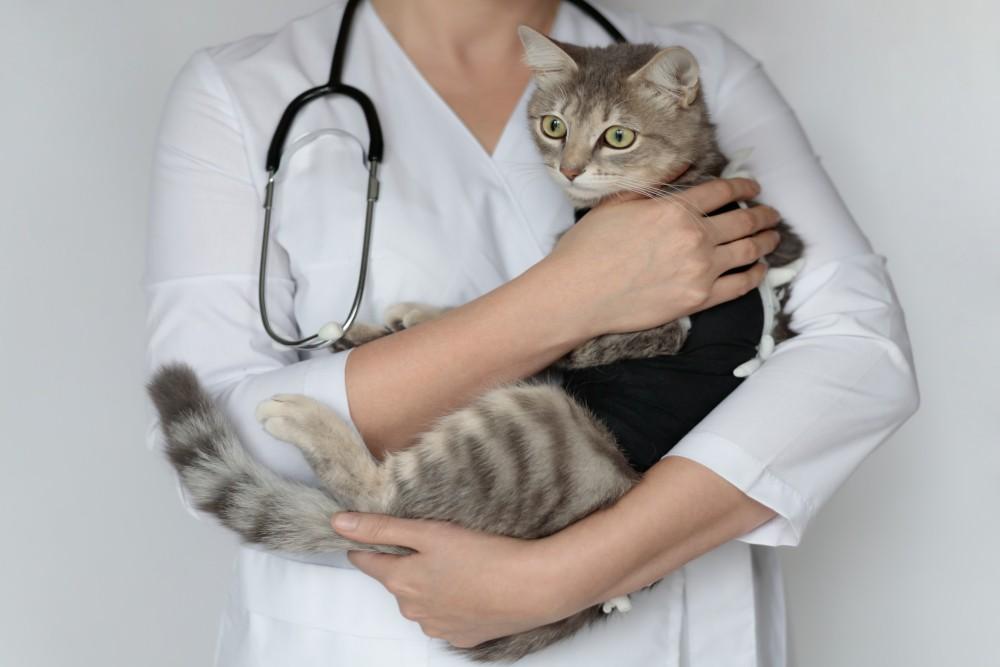
For cats that cannot tolerate a traditional collar, an alternative is a jacket or jacket, which also limits the cat's access to the wound while providing greater comfort. You must ensure that these solutions are properly adapted to your cat's body and do not restrict his movement or cause additional stress.
How to adjust and monitor your pet's diet and activity after surgery?
Adjusting and monitoring your pet's diet and activity after surgery are key elements in influencing the speed of his recovery. First of all, the diet should be established in consultation with a veterinarian in order to provide the animal with all the necessary nutrients without burdening the stomach and intestines. In terms of nutrition, it is worth considering special veterinary foods that are easily digestible and adapted to the needs of cats after surgery. Such products do not cause gastrointestinal disorders and are easier to digest.
How to adjust a cat's diet after surgery?
After surgery, the first meal can be offered to the cat only after 6 hours of fasting after surgery, taking into account the type of surgery undergone. Food should be easily digestible to avoid excessive tension in the abdominal muscles, which can impede wound healing. Unlimited access to fresh water is essential to maintain adequate hydration and support bowel function, especially when motility may be slow. In extreme cases, when lack of appetite persists more than 24 hours after surgery, consultation with a veterinarian is necessary.
How to monitor your cat's activity after surgery?
Monitoring your cat's activity after surgery is just as important as adjusting her diet accordingly. You should provide a calm environment for your cat to prevent him from licking wounds, and avoid situations where your cat tries to jump on chairs or other places, as this can compromise the healing process. In the first days after the procedure, the cat will behave quite calmly, but you should monitor the pet's behavior and, depending on the type of operation, adjust its activity level in accordance with veterinary recommendations. If you notice any warning signs, such as vomiting or loose stools, you should consult your veterinarian to provide the best care for your cat and support its recovery.
How to plan for a return to normal activities and play after cat surgery?
Returning to normal activities and play after surgery will certainly make our cat happy. It is important to care for your cat after surgery in a way that supports not only physical recovery, but also emotional well-being. It is important to skillfully read the signals sent by the cat after surgery, which will create optimal conditions for its regeneration after surgery. Later in the text, we will advise you on how to gradually return your cat to daily activities and play to support his full recovery.
When can you start introducing your cat to normal activities?
Before you start playing with your cat, make sure that stitches and wounds from spaying or other surgery are completely healed. Cats usually recover quickly from procedures, but each patient's experience may be different. Watch for signs of anxiety and be careful not to be too quick to encourage activity, especially if your pet is showing signs of discomfort.
How can I safely reintegrate my cat into play activities after surgery?
As soon as you notice that your cat begins to show a great need for physical exercises and, it seems, is ready for the game, you can offer it various classes. Initially, choose calm games (they should not last too long, then you can gradually increase their duration). Those that do not require jumping or performing other tiring actions that can overheat, cool or expose the animal to stress. It is extremely important to take care of the cat, given its individual recovery speed.
Summary
In the article, we focused on describing comprehensive cat care after surgery. Below is a brief presentation of the most important topics that we discussed to help you properly care for cats after surgery:
- We described how to prepare for a cat care after surgery. We drew attention to the need to create safe and comfortable conditions for the pet. We also emphasized how important it is to organize appropriate transport and adapt the home space to the needs of the cat during its recovery,
- Then we focused on the most important aspects of postoperative care. We emphasized the importance of observing the health of your cat, relieving pain and preventing infections. We drew attention to the need to monitor the reaction of the pet to the drugs introduced and by behavior after the procedure, emphasizing that the adequacy of treatment depends on the type of surgery,
- We showed you how to properly care for the wound and change the bandage of the cat after surgery. We told why it is extremely important to regularly check the condition of the wound and keep it clean. We recommend that you strictly follow the instructions for the care of the wound recommended by your veterinarian,
- We explained how to use a protective collar for a cat after surgery. We talked about the advantages of protecting the wound from additional damage,
- We discussed how to adjust and control the nutrition and activity of your pet after surgery,
- We told you how to plan a return to normal activity and games after surgery with a cat. We paid attention to a gradual increase in activity and adaptation of games to the current health status of a pet.