Worms in a cat
Worms are one of the most common parasites in cats. Young kittens are at risk of infection already while drinking milk...
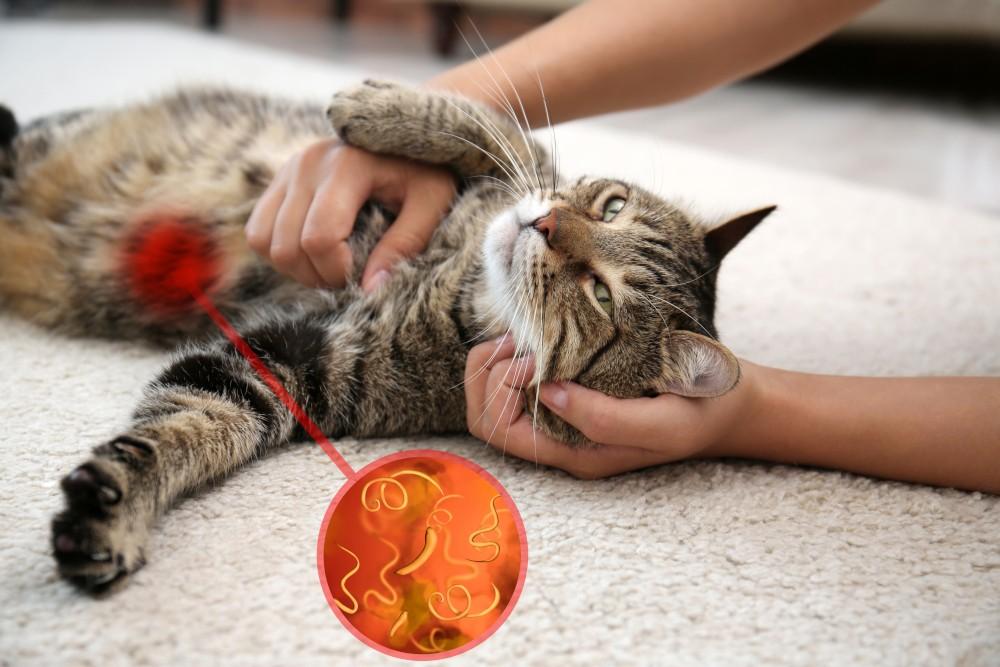
Cat roundworm (Toxocara cati) belongs to the genus of nematodes that live in the small intestines of our cats. Cat roundworms are sexually dimorphic, meaning females are different from males. Their size ranges from 3-10 cm, that is, they can be seen with the naked eye. They are long, white and resemble spaghetti noodles. Females are usually larger than males. They are very common in the environment, as worm eggs can survive outside the host for up to several months. Cats become infected through food contact with the feces of an infected person. The eggs then move through the body to the intestines, where they reach sexual maturity. Sometimes infection occurs with the participation of an intermediate host - nonspecific, that is, small mammals. Cats that hunt mice or rats are most vulnerable. The disease that causes ascariasis is called ascariasis or toxocariasis. It occurs sporadically in humans.
Cat roundworm - symptoms of infection
Most cat worm infections can be asymptomatic, depending on the condition and age of the cat. The most dangerous infection is for kittens and malnourished individuals with a weak immune status. In extreme cases, even death can occur. Among the most common symptoms of feline roundworm infection are vomiting and diarrhea, alternating with constipation. They can often contain adult worms. The feces may contain bits of blood or mucus. The animal is apathetic, haggard, and reluctant to eat. There are also cats that have a voracious appetite but do not gain weight. The coat is dull, brittle and thinned. The abdominal contour may be larger. Kittens that are already exposed to breast milk will experience growth and developmental problems. The most vulnerable, of course, are cats that go away, but sometimes domestic cats are also infected.
Ascaris in cats - treatment and prevention
If you suspect your cat has worms, you should examine your pet's feces. This is the main procedure for confirming infection. The eggs of the parasite are too small to be seen with the naked eye—a microscope is needed. Such an examination is carried out in every veterinary clinic. If the result is positive, the animal must be dewormed. If there are more animals in the household, although they may not show symptoms, the entire “herd” should be treated at the same time. To avoid infection, preventive deworming of animals is recommended depending on the needs and care for environmental hygiene in their environment.