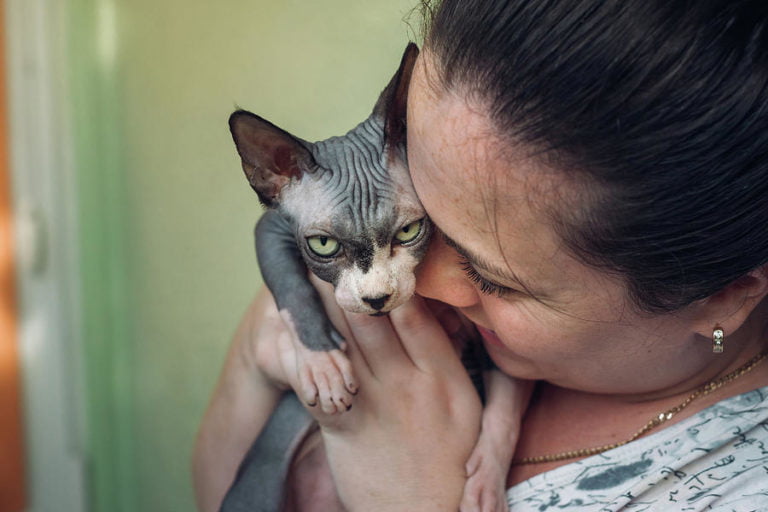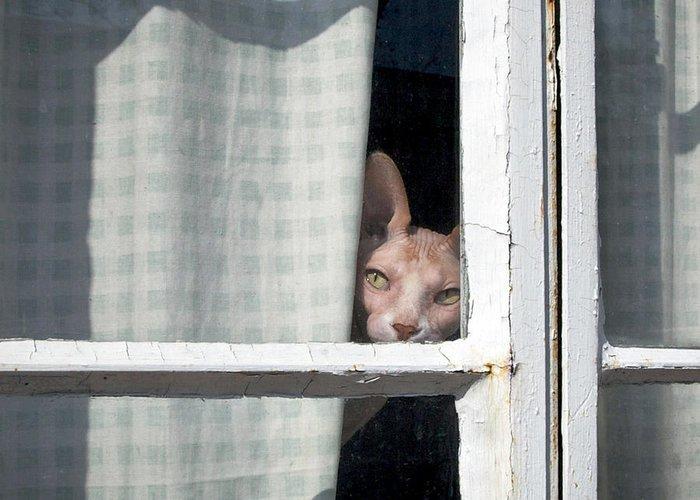
What makes cats leave home?
Sometimes the animal is not found in the first hours after the disappearance. It happens that it takes several days or even months before the frightened ...
Content
Go die?
It is often said that cats die. As if they, leaving far, far from home, are looking for some special place so that their owners cannot find their lifeless bodies. However, it is difficult to believe that a young, healthy cat or kitten will die soon. Because such cats also don’t come back from time to time. Therefore, the problem of abandoning pets should be looked at from two perspectives, taking into account the age of the missing person.
Why do young and healthy cats leave?
- Instincts
Usually, in early spring, cats and kittens leave the house in search of a mate, after which they may simply not return. There may be several reasons for this - other people can collect the animal (especially if the cat is a beautiful, well-groomed breed of animal), cats can give birth to kittens and stay with them.
It is a mistake to think that this can only happen to indoor cats accustomed to outdoor life. Often, driven by instinct, even those minchi who have never been outside beyond the window sill leave the house.
The second most common reason for the disappearance of cats is associated with another cat instinct - hunting. A cat can see a bird flying past and, not sensing the danger created by the height, simply jump out the window after it. Other interesting events outside the window may also attract Minch's attention, including falling leaves, snowflakes, etc.
- Fear and stress
Unfortunately, owners whose cats go missing are often to blame: the animal may become frightened, for example, by a family scandal and run away from home, but then cannot find its way back due to severe stress. It often happens, for example, after the New Year holidays, when the noise of fireworks frightens many pets.
Cats often disappear from irresponsible owners who forget that there is an animal in their house - they carelessly leave windows and balconies open, and a cat that likes to sit by the window and watch what is happening around may simply fall out due to inattention. Having fallen out of a window or balcony, the animal becomes confused in a new and unfamiliar territory and, following instincts inherited from its ancestors, tries to hide in some hard-to-reach place (for example, in a basement). But new troubles appear. Stray cats are not particularly liked when they are young, because they already suffer from a lack of food, and here they will have to share another mouth.
A domestic animal also does not know how to defend itself from a pack of stray dogs. Of course, he will immediately try to climb a tree where no one can catch him. But what if there is no tree nearby? One medium-sized cat can handle three dogs of its own size. But has anyone seen dogs form their packs based on size? This is hardly possible. A domestic cat, no matter how sad it may sound, can simply be torn to pieces by an unattended or stray dog.
This happens especially often when there is also a dog living in the house next to the cat, and it simply does not occur to the mink that man’s best friend can attack his companion.
- Cars
A house on the side of a busy road is a potential danger for an escaped pet. A car can easily injure a small cat. Rarely does a driver stop to look at the condition of a downed animal. You can count on one hand the number of people who will take a downed creature to a veterinary clinic. Accordingly, the cat may simply die from the injuries received.
In autumn and winter, cats often warm themselves under the hoods of cars, sitting on the car's wheel. The driver will start the car and drive off, but the animal simply will not be able to escape. Almost always has a fatal outcome. Therefore, drivers should always ensure that there is no living creature sitting under their vehicle before leaving.
In rare cases, cats do not return home because they cannot find their way back. Usually, a good sense of smell and visual memory help to reach their home within 3-5 days.
Why do old cats leave?
All of the reasons listed above can also apply to much older cats. In addition, old people usually leave and do not return not because they do not want to, but because they cannot. Even a member of a pack of wild lions will never go out into the sun near his family. He will find a secluded place and peacefully spend the last hours of his life there.
They say that adult cats are able to take on serious troubles, driving away trouble from the owner's house. True, in such cases they leave, never to return. You don’t even have to try to look for your pet - it simply disappears, as if falling into a well. Of course, you can search the Internet for a million different reports and theoretically find so-called animal cemeteries. But it doesn’t say that your pet went there...
What to do to prevent cats from getting lost
Anyone who knows why cats are disappearing also understands that there is no insurance against this. However, you can reduce the risk of missing your pet cat, and it is better to do this right away so as not to worry about finding your lost friend.
The first step is to understand the cat's lifestyle in your home. The less time a cat spends unattended by its owner, the less chance it has of getting lost.
Some owners try not to let the animal out of the house, and this is, of course, the most effective way not to lose a cat.
However, it is not suitable for everyone, because not everyone can lock a pet in a room, especially if it is a private home. Therefore, try to always keep an eye on the animal if it goes outside the house to get some fresh air, and it is better to take care of things like a chip, a collar with the name of the animal and the owner's address, phone number, which will allow you to quickly recover the cat if it goes missing .
- Preventing escape.
The main reason why a cat might go missing is natural - it might sneak out of the house during a search. There are a million different tips on what to do if your cat gets lost in this situation, but it's better to prevent this possibility in advance. The options are different. First - a kitten can be sterilized (or a cat castrated), which is also very humane in relation to an animal whose offspring no one needs: such a kitten will suffer from neuroses caused by years of sobriety, and will not leave the house. - Don't let him leave the house!
If you are not going to sterilize the animal and at the same time not deny him the pleasures of walking, do not let the cat out of the house unattended. If you don't want your kitten to get lost, take him for a walk where there are no cats nearby. Otherwise, you risk not only the animal running away, but also causing a fight. - Precautionary measures
You also need to ensure that the animal does not get lost at home. Firstly, never scare a cat, because he can run out of stress and you won’t even notice it. Secondly, before you bring the kitten home, do not be lazy and place a screen in front of the windows, but do not leave the windows open for no reason.Also, make sure that the front door is always closed, and teach household members to always check when entering the house whether a cat has made its way into the stairwell or onto the street. This is especially true if some scoundrel constantly unscrews the light bulb in your entrance and it is always dark there - many cat lovers have repeatedly complained that they lost a black cat that ran out into an unlit entrance, but they did not notice it. .
Cats are extremely curious animals and love to rub up against your legs while you stand on the porch talking to a neighbor, a visitor, or the mailman delivering a package. Therefore, it is better to wean your cat from this habit in time and always check if the mink ran out of the house while you were busy with something else.
How to find a lost cat
There are many tips on what to do if your cat goes missing, but the most important thing is: never panic or hesitate! The sooner you start searching, the better for you and your missing cat.
- First: carefully inspect the staircase and corridor.
It is preferable to do this with a powerful flashlight - if you lose a black cat, he can sit quietly in a dark corner under the stairs, and you just won't see him. The second step is to look under the windows, into the basement and attic of the house.Searching is best done in the early morning or late evening when it is relatively quiet. Then the cat will not be so scared and, perhaps, she will come out of hiding.
Neighbors' houses and entrances also need to be combed - if you lost a cat who has always been a real pet, he could get confused and stumble upon the same entrance, not knowing where and how to look for his home. Bring your pet's favorite toy or treat for this quest, it will get his attention. And do not despair if the first stage of the search ends in vain - the animal may be hiding because, for various reasons, it is probably simply afraid to respond to your call.
- Second: expand your search
If the animal is not found as quickly as you would like, it is useful to expand your search. Walk the streets nearby, asking passers-by, especially children who are playing in the yard and may have seen an unfamiliar cat wander into their street or home. Usually, each apartment building has its own cat aunt, who has taken on the role of cook and feeds stray animals. Look for this woman (or maybe man) to see if she has noticed that the well-groomed house cat has started to come and feast on her food.At the same time, prepare and print as many advertisements as possible, posted in nearby and distant areas. Priority is kindergartens, schools, clubs and sports sections, shops, veterinary clinics, as well as stairwells, that is, all those places where a large number of people usually circulate. In the ad, you need to write in large letters that your cat is missing, and also indicate exactly its signs, the place and time when the animal disappeared, and, if possible, post a recently taken photo where the animal is clearly visible. visible, and not lying on the spotted sofa. Don't forget to add your contacts too.
If the animal has not yet been found, replace the signs every two weeks on average - if they look old and faded, people will not pay attention to them.
Contact animal shelters because someone may have found your missing friend and taken him there. Leave information with a description of the cat and your contact information for shelters. Contact your local State Police, City Police, and State Fire and Rescue Service and notify them of the disappearance of the animal, as well as leave your coordinates in case the animal comes to their attention.
- Three: Engage the Community
If all previous searches have been in vain, turn to the media for help. It is not necessary to immediately go to the newspaper or television, although this is also a very effective way; first try to place information on the Internet - for example, on social communication portals.