Green taboo. Plants poisonous to cats
Article from the Astes magazine archive
Content
Veterinarian Normund Fedorov advised.
First of all, it should be said that indoor cats that are not taken outside show the greatest interest in indoor plants. Those who take regular walks around their territory outside the home are relatively indifferent to indoor plants. This is also understandable, because the life of an indoor cat is more monotonous - its territory is much more limited, so each new object arouses interest. Therefore, owners of indoor cats should carefully consider which flower pots and vases to place on the table or windowsill. Let's start with the most dangerous greens and find out what to do if your cat chews a leaf, flower or stem of a poisonous plant.
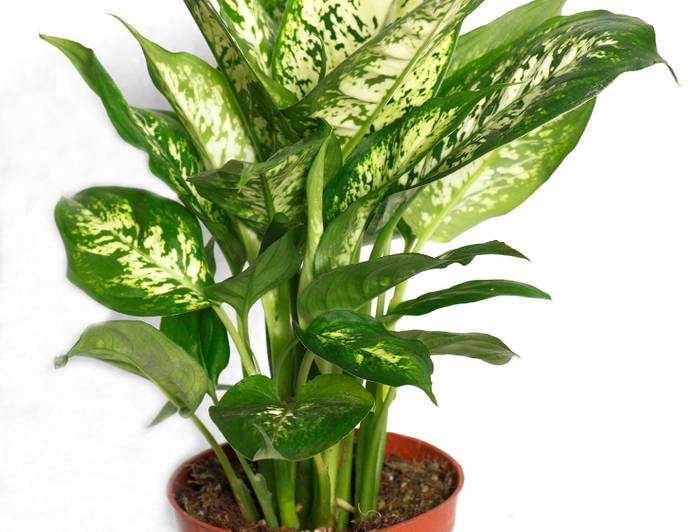
The most dangerous is Dieffenbachia!
Dieffenbachia
This is one of those ornamental plants that decorate the windowsills of many houses. Oddly enough, Dieffenbachia cats tend to eat by chewing its leaves. However, this is one of those, by the way, not so many plants, the poisoning of which really causes pain might die! Death from plant poisoning is not a common occurrence for cats, but this flower may make it happen. Even if the outcome is not as dramatic, in more severe cases the cat may need to be treated for several weeks.
How long does it take to crush a plant to become poisoned? Under no circumstances eat too much, as the plant is very poisonous. Toxic substances are found in its leaves, shoots and part of the trunk.
Main symptoms at the beginning of poisoning:
- salivation, possible mouth ulcers, vomiting; then - severe diarrhea, convulsions, head shaking, loss of coordination.
What to do?
- Hurry to the vet! Every minute counts! Removing these toxins from the body takes a relatively long time, and the kitten will have to be treated intensively.
If you suspect that a cat has bitten your Dieffenbachia, go to the vet immediately - even if there are no signs of poisoning yet!
Very dangerous - thimbles
It may no longer be a fashionable flower, but it is still grown in small gardens. Thimble contains substances that can cause poisoning in a cat and significantly affect the heartbeat. In addition, these dangerous substances are found not only in leaves and flowers; they can affect the cat’s health, even if the pet has tried the dried thimble.
Symptoms of poisoning:
- vomiting, diarrhea, severe heart failure, thready, very rapid pulse.
What to do?
- Also in this case, the kitten may die if a visit to the veterinarian is delayed. A cat is more likely to survive poisoning from thimble than from Dieffenbachia, but thimble is also very dangerous. In fact, many plants can cause poisoning in an animal, and flowers can cause poisoning in an animal, but in other cases it is usually not fatal.
Other poisonous plants
Also, don't let your cat try plants with poisonous bulbs (or gums), such as:
- plants of the lily family,
- daffodils,
- hyacinths,
- amaryllis,
- urginea or sea onion.
Symptoms of poisoning are vomiting, diarrhea, mouth ulcers. If you see them, contact your veterinarian who will evaluate the specific case and recommend the best course of action!
Plants that are dangerous for cats in the garden and on the balcony:
- blue slipper, common primrose, daffodil, oleander, beavertail, codiaum, spurge, poinsettia, azalea, mistletoe, hydrangea, monstera, petunia, primrose, rhododendron, oleander, wolfberry, mallow, chives, nightshade.
Poisonous (but not fatal)!
- Christmas flower
- flower pea
- Lupins
- Delphiniums
- Snow roses
- Jasmine
- Alpine violets
- Primrose
When poisoned by these flowers, vomiting usually goes away quite quickly. However, in this case, it would be safer to contact a veterinarian, who will advise how to provide first aid at home.