Can hairless cats get fleas? 3 facts you should know
Fleas and other insects can be a big problem for pet owners and a huge irritation for pets. Fleas can...
Content
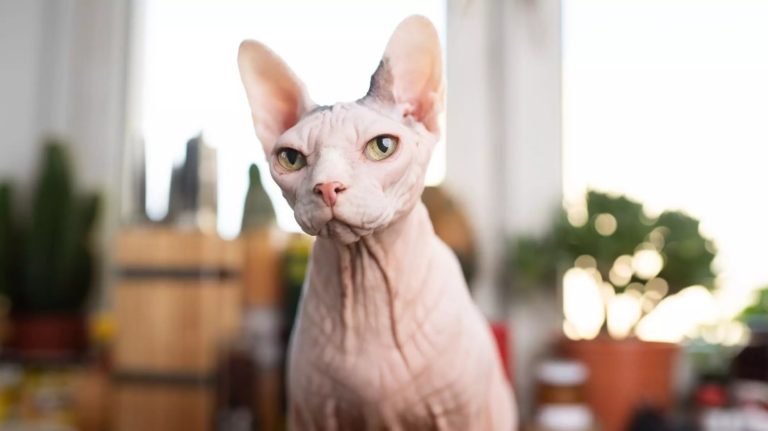
Can hairless cats get fleas? Yes. Fleas do not need hair to feed on animal blood. They will attach themselves to any animal they can, hairless or hairless. Hairless cats are just as susceptible to fleas as any other cat, but fleas are much easier to see on a hairless cat.
Let's look at this in more detail. Here are 3 things you should be aware of when it comes to hairless cats and fleas.
Why do fleas get on them?
Fleas are external parasites most commonly found in cats and dogs. They are very small, about 3 mm when mature, and are usually brown.
Fleas are very well adapted; they have claws that allow them to hold on to a pet, a sharp mouth that allows them to easily bite and draw blood from your pet, and strong legs that can help them jump from one place to another with ease.
Fleas crawl on the skin of their victims and bite them to feed on their blood. The bite leaves an itchy raised bump, similar to a mosquito bite. Many pets try to scratch those pesky, itchy spots too hard, which can result in hair loss.
Many pets are even allergic to fleas and their bites, which can cause additional problems and require medical attention if the problem persists.
The biggest problem that fleas present is their tendency to spread disease. Fleas carry and transmit viral and bacterial diseases, as well as other parasites. They are especially well known for their role in the transmission of bubonic plague. In recent years, fleas have become the cause of the spread of typhus and other dangerous diseases for both domestic animals and humans.
Fleas do not require a furry animal as prey. They are content with any creature that has a ready source of fresh blood, including hairless cats. Hairless animals can be preyed upon by fleas just like any other cat.
One advantage of hairless cats is that fleas cannot hide under their fur and are much easier to see on their skin.
Fleas also often lay eggs on their prey that look like small white ovals. These eggs are a clear sign that a pet has fleas and are especially easy to spot in a hairless cat.
The eggs hatch quickly, so it's important to try and remove them before they hatch and create more problems for your pet. There are special flea combs that are suitable for woolly pets, but for hairless cats, it is recommended to use a non-aggressive baby soap that contains lye as an ingredient.
Lye will kill fleas no matter what stage of life they are in.
How to prevent fleas in hairless cats in the first place
The easiest way to keep your pet safe from fleas and the many problems they bring with them is to prevent fleas from getting into your home or onto your pet in the first place.
Hairless cats differ from other pets in that they have sensitive skin with very little protection, so topical flea treatment can cause irritation.
However, there are certain brands of flea products that are less likely to cause problems in cats. Advantage Flea Remedy is non-toxic and can start killing fleas in all life stages within 12 hours.
The owners claim that the mixture is even edible, it’s just that it’s terribly acidic, which means that it won’t hurt the outside of the cat.
There are also drugs for the treatment and prevention of fleas that can be taken orally. They are made for different sizes and flea exposure so you can choose what works best for your cat.
Many owners of hairless breeds use other, more natural flea repellents. Many owners use essential oils in various flavors to repel fleas. Some of the scents are lavender, mint and lemongrass.
If you choose this route for your pet, it is very important that the essential oil you use is very pure and that you feel comfortable applying it to your skin.
Essential oils can be used by diluting them with water and then spraying the resulting solution on your pet. The spray can also be used in places where fleas can gather, such as in your pet's bed or in doorways where they can enter your home.
The surest way to prevent fleas from entering your home is to talk to your veterinarian and get a professional opinion on what is best for your pet.
What to do after fleas?
If your hairless cat has fleas and you did everything right, your pet should have made it through this ordeal almost painlessly. Now it is very important to understand that fleas can linger in your home to cause more problems later.
Because hairless cats tend to live at home, they are less likely to be re-infested with fleas from a source outside of your home. This means that it is easier to prevent hairless cats from getting fleas if your home is also free of fleas.
Some steps to take to make sure your home is flea free:
- Wash all your pet's bedding in hot water.
- Wash favorite places to sleep (window seat, sofa, edge of bed)
- Do a deep carpet cleaning
- Try using a carpet flea spray.
- Sweep all hard floors
- Wash pet toys in hot water
Fleas can stay in your house for several weeks or even months after your pet is clean. It is very important to contain areas that they can hide is clean. Fleas are very fond of dark places, for example, under chairs, beds or in the depths of a carpet or bedding.
While you make sure that there are no fleas in the house, and your cat is protected by any medicine or a frightening agent, fleas should not be a big problem in the future.