Why do cats hiss at new kittens or cats?
If you notice some hostility between the new kitten and your cat, you may be wondering why. Read on to find out…
Content
Getting a new kitten is exciting for everyone, but perhaps not for the cat that has lived with you the longest. If you recently brought a new cat home and notice that the old cat is hissing or growling at your latest addition, it's time to step in for the sake of both cats. You may think of hissing as one of the signs of aggression, but the reality is much more complicated. Your first step is to figure out why your cats don't get along.
There are several reasons why these cats may not get along. Getting to the bottom of it will be helpful to piece together how you can create harmony between two pets.
In addition, you will learn more about how to properly calm an older cat. It is important to set boundaries so that both older and younger cats feel respected and safe.
Finally, if you haven't submitted two animals yet, you must take steps to make sure you're doing it right. The initial introduction of two cats can make a huge difference in how they perceive each other in the future, so keep that in mind.
Why don't my cats get along?
The reality is that often, even if your adult cat is friendly, it can be difficult for her to adjust to a new kitten. Treat both of your pets with understanding and patience and it will help you on your future journey.
While younger kittens are often eager to make friends, older cats are sometimes more reserved and level-headed. As a result, conflicts sometimes arise between them.
Sometimes they hiss, stop eating, or even become depressed. If you are concerned about the health of your older cat or kitten, you should contact your veterinarian.
However, you may be confused as to why your older cat is hissing for new additions to your family. Here are a few reasons why your cats have a hard time getting along.
Older cats don't like change.
Your adult cat has gotten used to her routine, and as a result, sometimes older cats don't want to change. Generally speaking, cats don't like change. This is especially common when it comes to their territory, but more on that later.
As a result of the changes, your older cat may experience tremendous anxiety or feel misunderstood. Also, finding ways to calm your adult cat can help ease the stress that can come with having your new kitten.
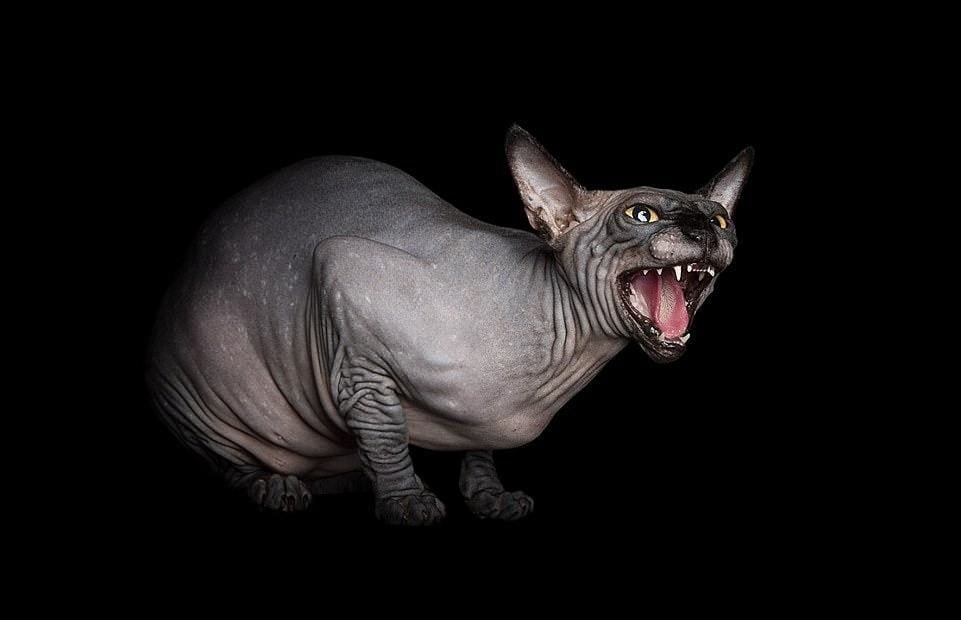
They are territorial
Cats are territorial creatures. As a result, your senior cat will likely feel like her home has been invaded by an uninvited cat. Most of the time, older cats think they own your home and that the new kitten is a threat to them.
Hence, they can act to assert dominance and claim their territory. Luckily, there are preventative steps you can take to ensure that the first meeting between your pets goes smoothly.
They want to be the center of attention
When you bring a new cat home, your old cat may feel like she will no longer be cared for. It is important that you prove to them that this is not the case. In addition to defusing competition for attention, you also need to make sure that cats don't compete for food.
You should expect to spend time with both your cat and your new kitten during this time. In addition, you should even spend extra time with your adult cat to calm her anxiety.
How to calm an elderly cat?
As mentioned earlier, it's possible that your adult cat will be excited about the arrival of a new kitten. There are steps you can take to calm your senior cat's nerves. This can help smooth the transition for your pet.
Use pheromones
Calming pheromones help your cat feel safe. They work by sending reassuring messages to the pet. During the transition period, when your cat feels like her lifestyle has changed, using the power of pheromones can be extremely helpful.
This is of course not a magic solution and you may wish to consult your veterinarian. However, they can provide your cat with a more relaxed base to work from.
Try Supplements
If you feel like your cat is experiencing anxiety and the pheromones are not working, you may want to consider trying a calming supplement to reduce her anxiety. If you need advice on this, you can go to a trusted veterinarian who can point you in the right direction for your individual pet.
Prepare your home
It's a good idea to prepare your home for the arrival of a new cat about a week before he arrives. This is so that your older cat can get used to these new items that are in the house. They will have time to get used to everything and smell it.
In addition, you must be sure that you have everything you need for your new cat. Better to be overprepared than underprepared; if you're stressed about the arrival of your new pet, your adult cat will be able to pick up on that anxiety and absorb some of it.
It is also an effective tactic to designate a special space, such as a small room, in which the new kitten will spend the first week. A local cat may come to the door of the room to smell the new kitten, but direct contact should be limited.
Give your new cat some personal space
You need to make sure that your resident cat doesn't feel like their space is being taken over by a new cat. This is especially important when it comes to food; animals should not be fed in close proximity to each other to establish that there is no competition for food.
Make sure your older cat is healthy (and vaccinated)
Unfortunately, kittens are prone to certain diseases, and if you want both of your cats to live together in the same place, it's important to take care of your adult cat's health.
Also, your younger, new cat may not be able to get all of their vaccinations until they reach a certain age, meaning that your indoor cat may become vulnerable to disease. To prevent this, make sure your older cat is vaccinated.
let them spend time together
You can't keep your cats apart forever, and you shouldn't. After all, your pets will have to spend time together. It is very important that you be tactful about this, especially the first time.
After about a week, you can encourage the cat to explore the new environment and encourage positive interaction between the two animals. Never force them, praise and treat them for positive behavior.
Pawp veterinarian Dr. Laura Robinson says that "time usually helps" cats get used to each other. She recommends that cat owners "introduce (cats to each other) for short periods of time if possible" to create a healthy environment.
Set a hierarchy
Your final task is to establish a hierarchy in your home. Cats need order, and hierarchy provides it. As a result, your older cat may try to set this up with a younger kitten. In some cases, this will mean that they spank or even hiss when the new cat does something they don't approve of.
This is normal, and as long as it's just hissing and spanking and nothing else, try not to get involved and let the cats figure it out on their own.
The older cat asserts its superiority, while the younger one learns all about boundaries. Cats have their own unique way of communicating with each other and it's important to respect it.
Dr. Robinson lists a number of reasons why cats may hiss, including as a warning of an attack, pain, "if they are frightened by something in the environment," or if the game's dynamics are too rough.
How do I introduce my cats?
Getting to know a cat takes time, patience and careful preparation. After your new cat has been in the kitty-safe room you prepared for her prior to her arrival for a while, and your cat has had a chance to get used to her new things and their smell, you can start introducing yourself.
You can encourage an activity they can do together. Be sure to give them the same treats, drink them in different bowls, and feed them in different places.
Getting to know cats isn't always easy, but there are ways to make it easier.
Introducing a new kitten to an adult, established cat is not always easy, but it is certainly possible with the right preparation and determination to make them develop tolerance for each other.
While these two cats may not immediately become best friends, you're keen to make sure they don't hurt or hate each other. Take small steps and remember when they are doing well so you can reward them with treats and praise.