Why does a cat lick
We perceive a cat's cleanliness as something natural, and we very rarely think about the fact that there are probably reasons why...
Let's try to understand the motives of cats.
The cat licks itself just to be clean.
Cats wash their bodies with their teeth and tongue. A cat's tongue is the perfect cleanser, with many rough, backward-facing bumps. The teeth are used for biting out pieces of food/dirt/foreign objects.
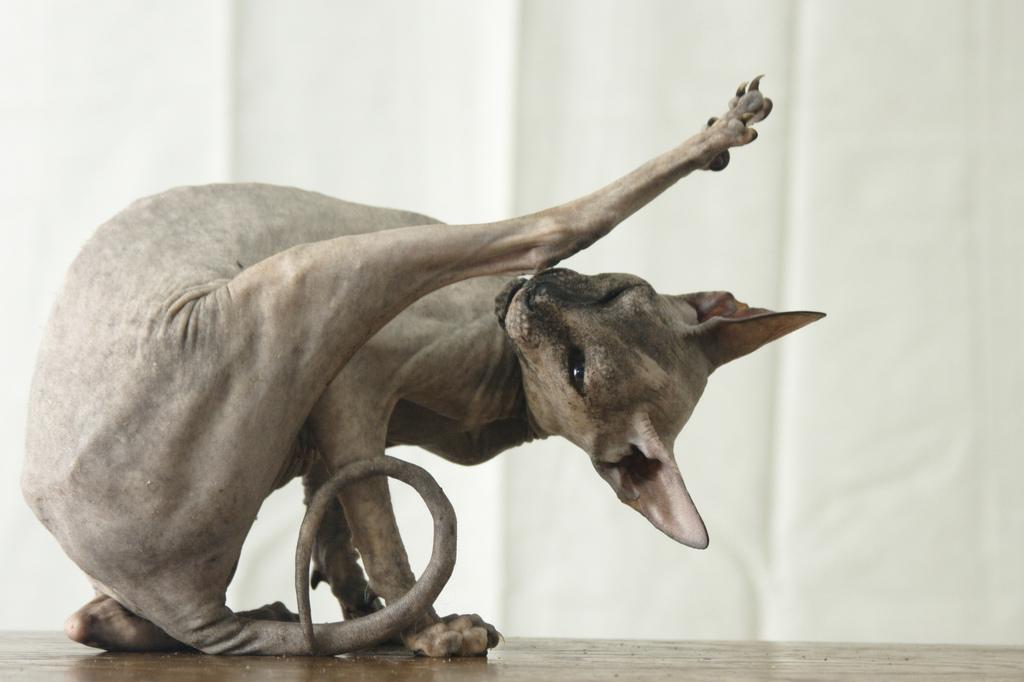
Usually, when licking, a cat observes a certain ritual: when observing, you can notice a certain sequence of actions. For example, your pet starts the process of licking from the shoulders, gradually moving to the back, paws and tail. However, as you know, a cat cannot reach everywhere with her tongue, so she uses her front or hind legs, moistening them first. With her front paws, she washes her head, neck, muzzle (eyes, ears, cheeks and chin). The cat changes paws depending on the side of the face being washed. Places that she cannot wash with her front paws must be washed with her hind legs.
There is an interesting observation: most of the cats are left-handed, or they are equally good at both paws, only 1/5 of the cats are right-handed.
Licking is a process that helps improve the condition of an animal's coat.
The cat needs to remove excess and already unnecessary hairs that must be removed. By licking dead hairs, the cat maintains its coat healthy and shiny.
Body temperature regulation (cooling and heating)
Fur is a protective layer between the cat's body and the outside world. Energy is expended on the evaporation of saliva, with which the cat licks itself, and the fur retains its properties better with such care.
Licking also allows the cat to style her fur in the way she wants and to regulate her body temperature. In summer and winter, cats “comb” their fur in different ways. Healthy, clean, smooth, fluffy fur (there is a feeling that it lies in separate layers) better maintains the optimum temperature, serves as an effective insulator. Licking allows you to cool off if necessary. As you know, cats sweat through the pads of their paws, which is insufficient in the warm season, so smoothing the coat gives additional air access to the skin.
The cat licks itself if you pet it
You have probably noticed that after you stroke your pet, he begins to take care of his fur more diligently. This is a natural reaction and an attempt to return your own smell. You should always remember that a cat is an animal and the world of smells plays a more important role for her than for you. She has no thought of offending you by washing away the smell of your hands.
The cat licks too hard (to the point of baldness) and too nervous to show you that there are some health problems
With increased licking, which comes to the formation of bald patches of skin or excessive regurgitation of hair, we must definitely pay more attention to the health of the pet.
This behavior is indicative of existing problems: possible food allergy (contains components that are not suitable for your pet) inappropriate nutrition and diet (excessive licking of the abdomen and back) poisoning (for example, plants) the presence of parasites (obsessive tail licking is possible due to the presence of fleas ) constipation (when licking in the anus) wounding the skin (the only available way for a cat). When treating wounds and using ointment, limit the cat's access to this area of the body.
Why does a cat lick
Other reasons are possible.
Whenever you notice that a cat is licking itself too hard and nervously and this becomes obsessive, you need to show it to specialists.
The cat licks itself for psychological reasons (due to stress).
Licking is not always associated with physiological causes. Excessive licking can be triggered by stress that the animal has experienced or is experiencing. We all understand perfectly well that a cat is a pet, for which a calm and familiar environment plays the main role. Washing and licking, the cat tries to calm itself and overcome the conflict.
Animal stress can be caused by: moving house renovation changing diet/sleep and resting habits new animal disappearance other animals new person in the house other factors.
Not every change in your life will necessarily stress your pet. However, you should always remember that your pet needs attention, care and affection. By paying more attention to it at times of change in your life, you may prevent many problems. Remember, a cat is a freedom-loving and independent animal, which you cannot impose your point of view on. It is possible to negotiate with a cat. If you failed to prevent stress and it causes big problems, then your pet needs to consult a specialist and prescribe medications.
Remember that the health of the cat depends on you, always be attentive to your pet.