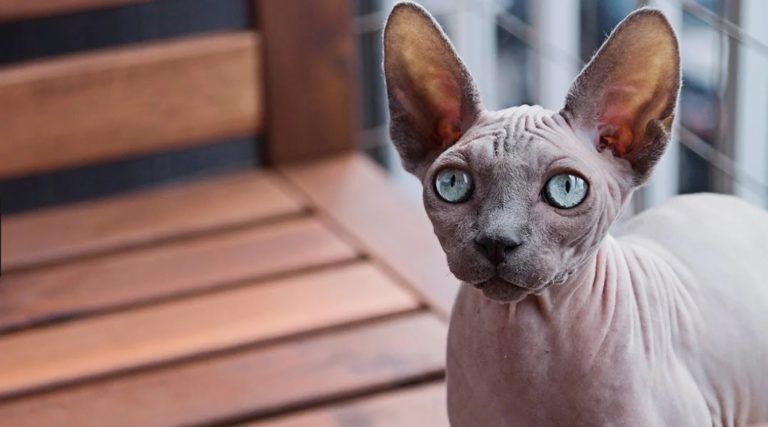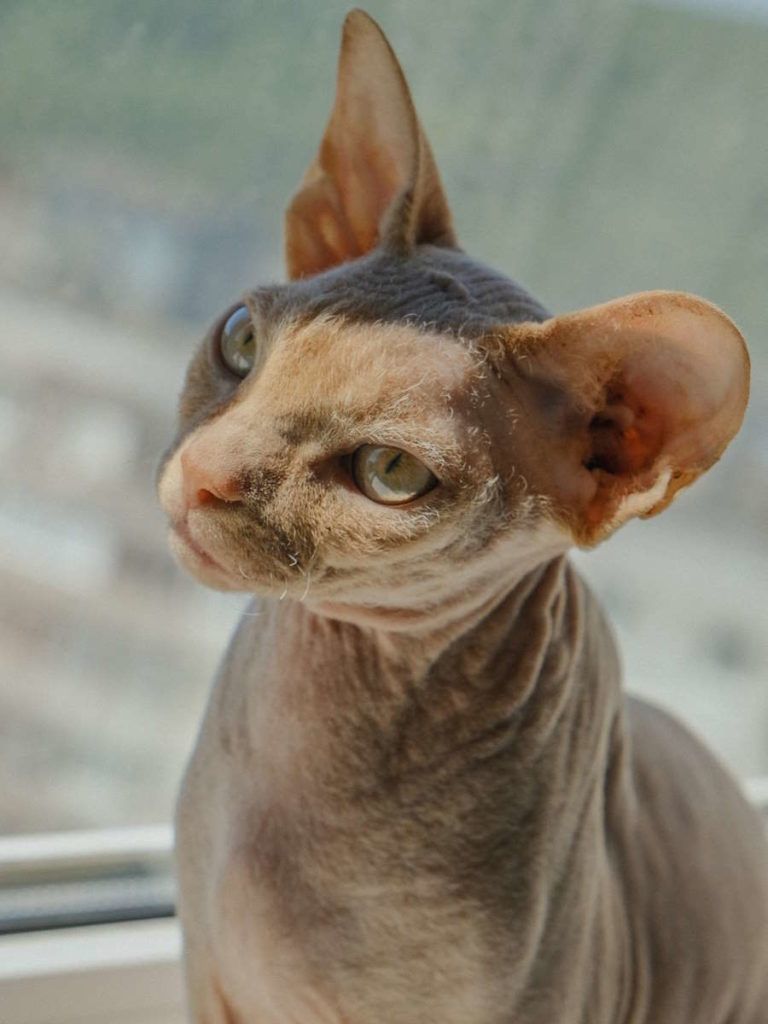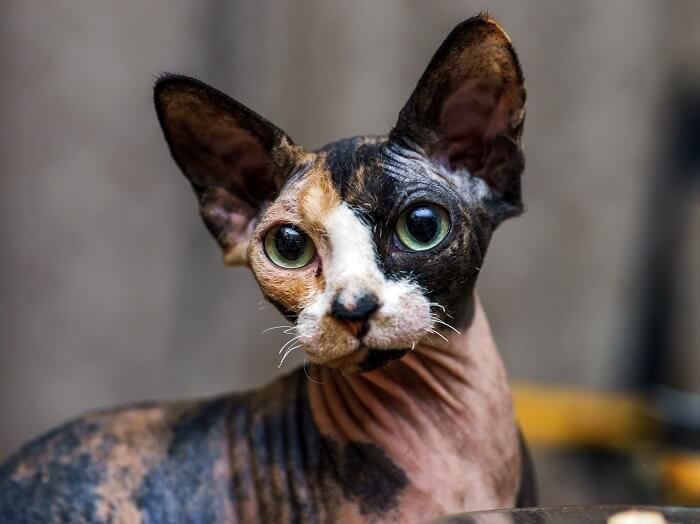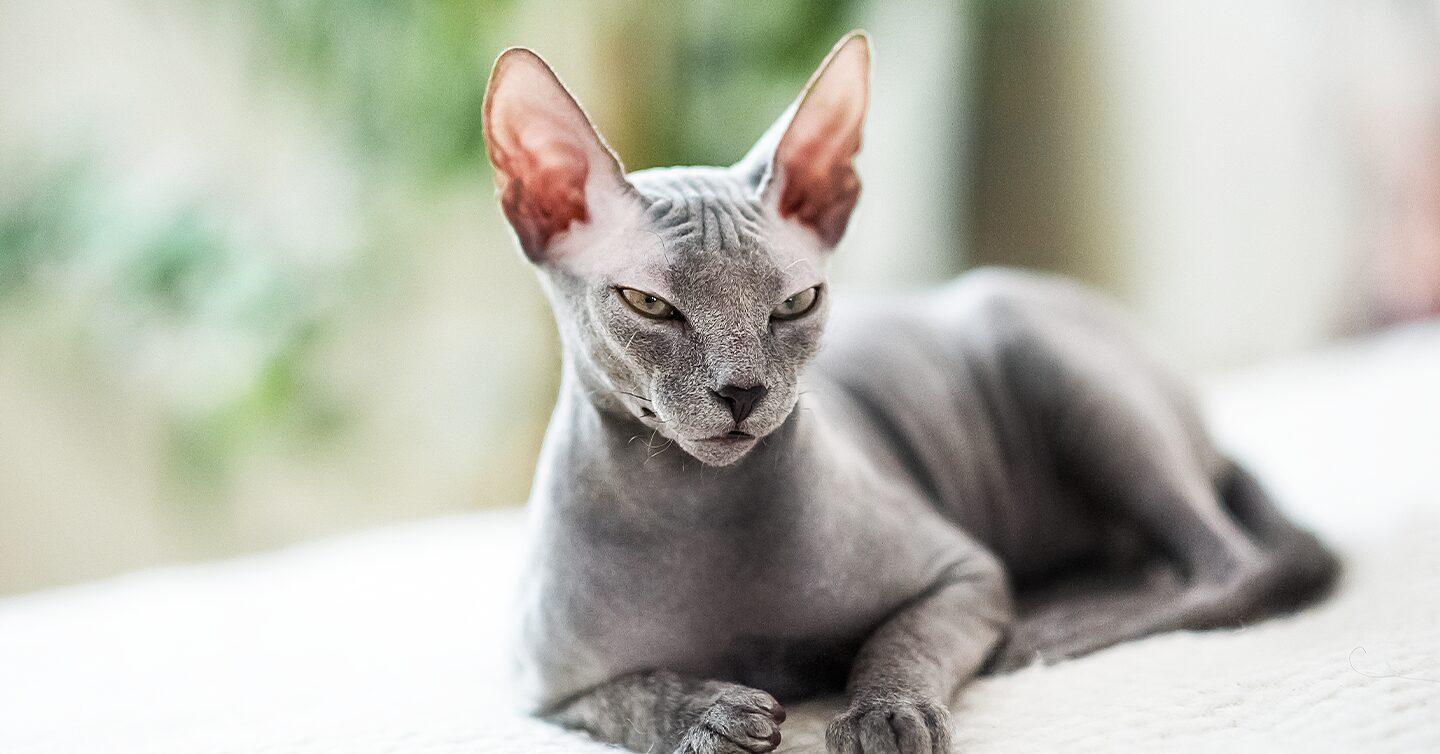
Vibrissae in a Sphynx cat
Vibrissae or vibrissae (in everyday life - whiskers) - tactile mechanosensitive long and hard hair in many mammals, protruding above the surface ...
Physiologically, each Vibrissa is in a hair bag, each of which is suitable for a hundred nerve endings. All Vibrissas are uninterruptedly supplied with blood and each vibrissa has its own area in the brain. Nervous impulses from vibrissas and eyes enter the brain, which summarizes the signals of the two systems and on the basis of these data creates a three -dimensional picture of the world. The slightest fluctuations in the environment do not go unnoticed for a cat: air flows are reflected from objects and are captured by vibrisses.
The fact that it is the mustache that are the first hairs that develop in future kittens in the womb, once again is a confirmation of the importance of the vibrissas. Sometimes the mothers and cats bite off the small vibrisses of kittens, probably the cat, thus, wants to prevent the release of inexperienced and excessively restless kittens from the house. Only after 5-6 months, kittens gain “normal” vibrissas. Vibrissa at the cat
So, the vibrissas of cats are special sensory organs, a kind of receptors tuned to the perception of the surrounding world and, depending on the location, they help the cat more accurately navigate in space. And it is not without reason that they stick to the sides to the width of the body in a proportionally developed animal - based on their signals, the cat always knows about whether she can pass through the hole she needed.
In addition, they have a different function - navigation, helping cats move silently in the dark. Since they react to the slightest movement of air, including the one that forms around the obstacle standing ahead, the mustache system allows you not to stumble upon this very obstacle in pitch darkness. Cats during hunting use vibrissas as a sight to more accurately aim at the victim.
Vibrissa location: above the upper lip - the longest and most sensitive (four rows on both sides) cheeks - several shorter vibrissas and usually 1 long chin - short and inconspicuous vibrissas of the overborn - several bunchy vibris of different lengths of the tail - invisible, almost completely merging with wool of the vibrissas of the ankles - the vibrissas are short, located small Board of the paw pads - the location between the pillows.
By the position of the Vibrissa, the competent owner of a cat can always guess about her intention and mindset.
Vibrissa position:
Vibrissas are extended forward - acquaintance with a new object/object, a sign of location and friendliness
Vibrissas are pressed to the muzzle, tense - an indicator of aggression from the cat
Vibrissas, sharply pressed to the face - an indicator of fright of a cat
Vibrissas are widely placed to the sides - the cat is trying to determine the size of the subject/object
Vibrissas are stressfully placed to the sides - the usual position during hunting and tracking the booty, or control of the behavior of the already caught game
Vibrissas are easily moved - determining weather conditions and adjustment/preparation of the jump (direction, strength, body position)
Vibrissa - movement when yawning after sleep - an indicator of complete calm and state of satisfaction of the cat.
Labor and damage to vibrissas.
Security measures.
Like any other hair, the vibrisses of cats alternately fall out of life and the growth of new ones begins. There are cases when a cat’s vibrissa changes color during the life of vibrissa. For example, in a light red cat in the place of the falling white, a completely black superfluous vibriss can grow, which either falls or remains. Remember how you would not like the view/color of Vibriss, never touch it to maintain your health and even the life of your pet.
There is an unspoken rule: you can never cut/pull/remove vibrissas.
The cat, having lost the vibrissa, will partially or completely or fully be the ability to navigate in space, which can lead to its death. Also, the animal loses the ability to hunt successfully. This is especially dangerous for animals living in the wild, or on free walking.
If the cat has lost the vibrissa for one reason or another, it is necessary to follow some safety rules: compliance with the “bed” (home) regime-it is not recommended to let the cat out on the street where it may encounter obstacles and not recognize them due to damage to the vibris. the usual situation in the house/apartment - if you planned a rearrangement, or the purchase of new items of furniture, it is better to wait until the vibrissa is restored At the cat to avoid injuries. Moreover, without vibrissa, a cat may not be able to correctly calculate the distance between new items and get injured in games/jumping is necessarily a more careful and caring attitude towards the cat during the restoration of vibrissa. Cats at the level of instincts understand how the owner reacts and whether he is trying to help her, therefore, you are in this difficult period of the cat’s life or acquire her trust, love and location, or lose everything.
Always love and take care of your cat (and her vibrissa !!!) and she will reciprocate.